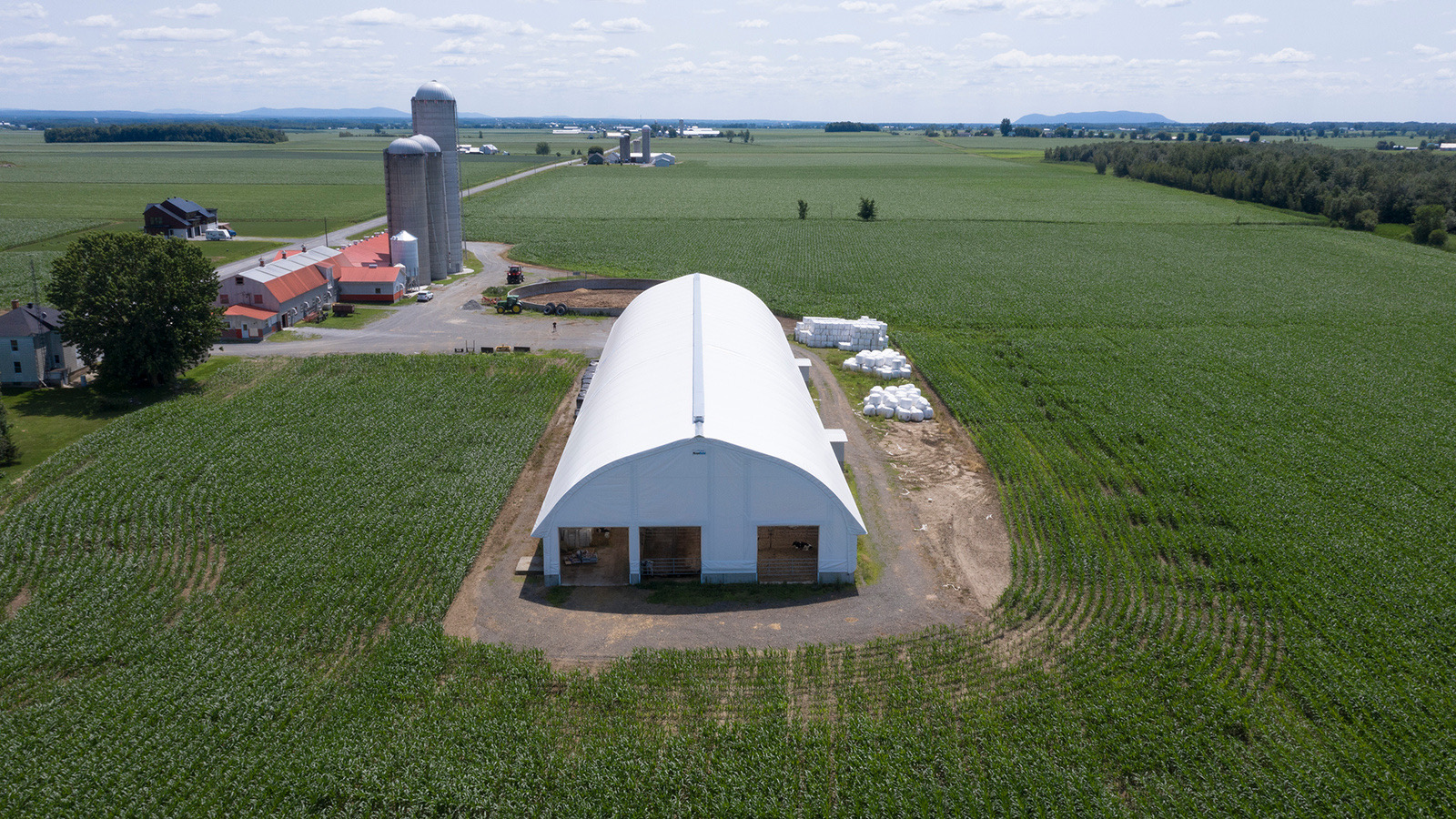
Aerial view of a fabric building on a dairy farm with silos in rural Ontario

DESIGNED FOR
LOCAL FARMS.

Engineered fabric buildings that protect your livestock, store your harvest, and shelter your equipment. Built to Canadian standards.

Buildings That Work as Hard as You Do

Dairy barn interior with cows under arched fabric roof and natural daylight

Dairy & Livestock

Natural daylight floods the barn all day, meaning healthier animals, lower vet bills, and no daytime lighting costs. Open ends and ventilation keep humidity low and your herd comfortable year-round.

Two fabric buildings for hay and grain storage with open-end loader access

Hay & Grain Storage

Drive loaders straight through with no posts in the way and no tight corners. Open ends keep product moving in and out. Protect your harvest from rain, snow, and UV without losing accessibility.
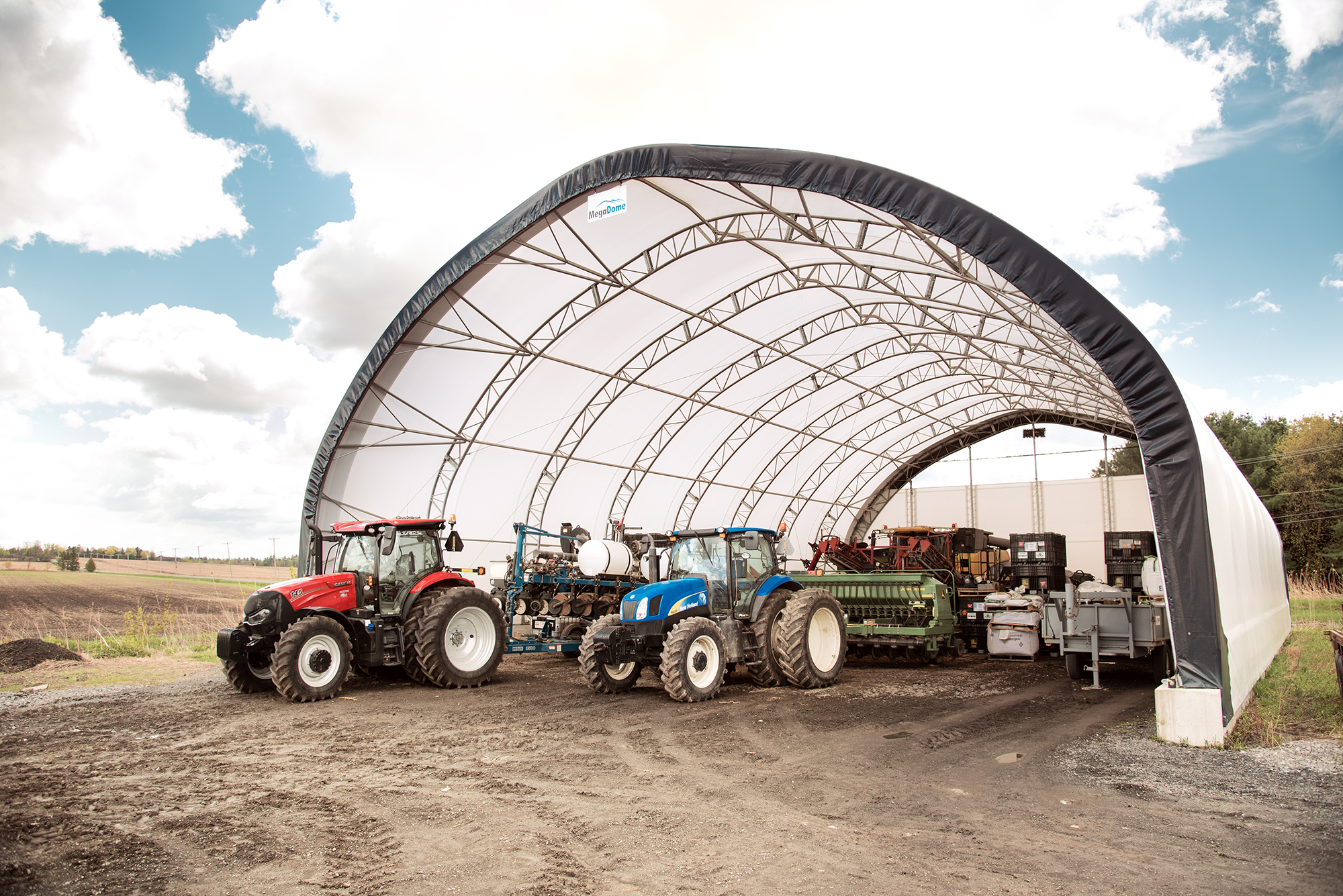
Farm tractors sheltered under a round-profile fabric building

Equipment Storage

Keep your tractors, combines, and implements out of the weather and ready to roll. Garage doors and open ends mean you never shuffle equipment around to get what you need.
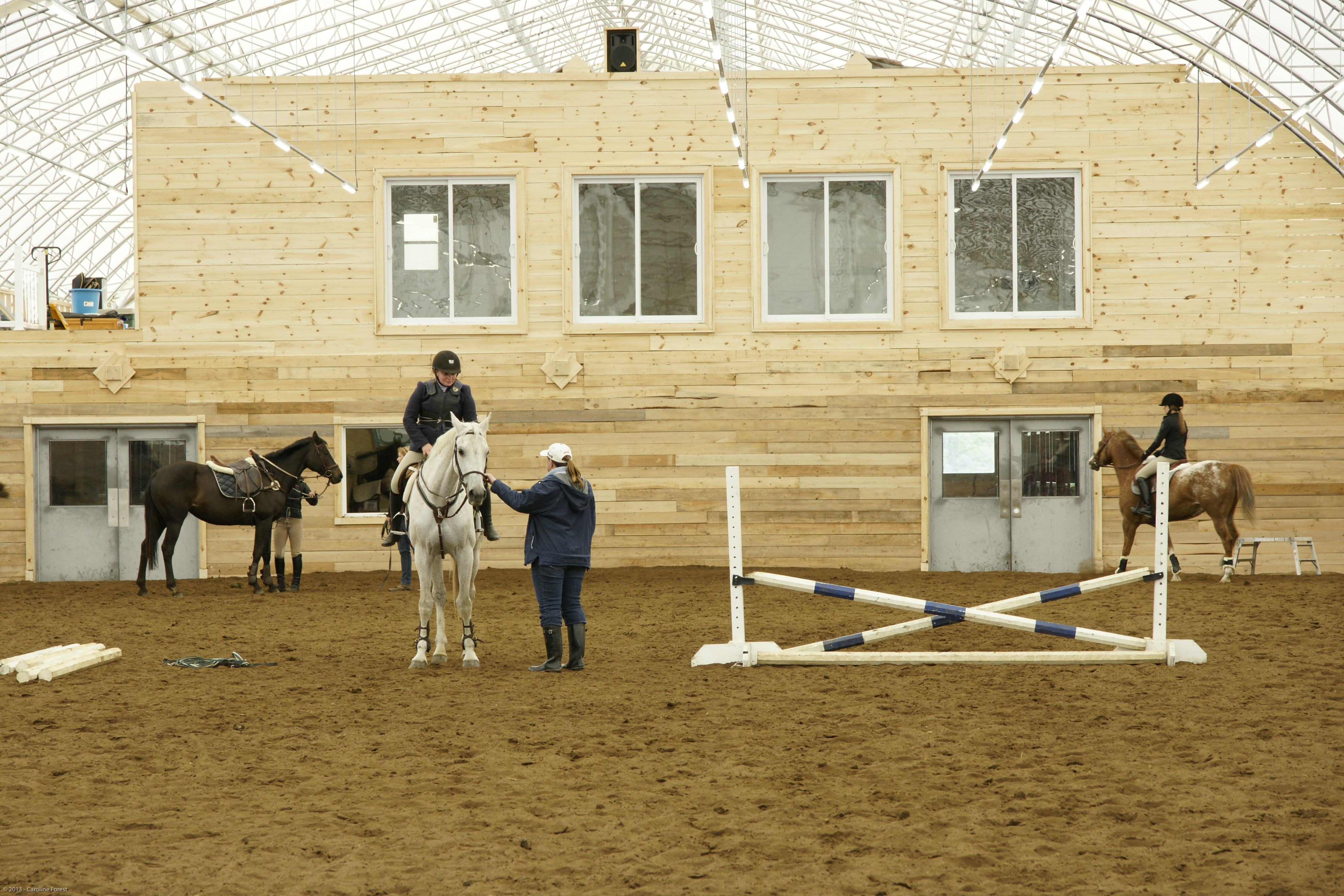
Equestrian riding arena inside a fabric building with riders and natural light

Equestrian & Arena

Soaring ceilings that feel like riding outdoors, with up to 45 feet of overhead clearance. Natural daylight through the fabric means you barely touch the light switch. No posts in the riding area.

Why Farmers Choose Fabric Buildings

  • Steel framing won't rust, even around manure, silage, and corrosive feed environments
  • Open ends, garage doors, or drive-through access to get equipment in and out without shuffling
  • Natural daylight all day for healthier livestock and lower lighting costs
  • Ventilation options that keep animals comfortable year-round without running mechanical systems
  • Engineered to the 2020 National Building Code: permit-ready, real structure
  • Go up in weeks, not months. Get your building operational before the season changes

How Big Can You Build?

Clear-Span Width33' – 160'
Interior ColumnsNone
LengthUnlimited
Peak HeightUp to 45'

Steel framing is sized to match your site's exact snow, wind, and load requirements. We engineer it to your conditions, not a one-size-fits-all kit.
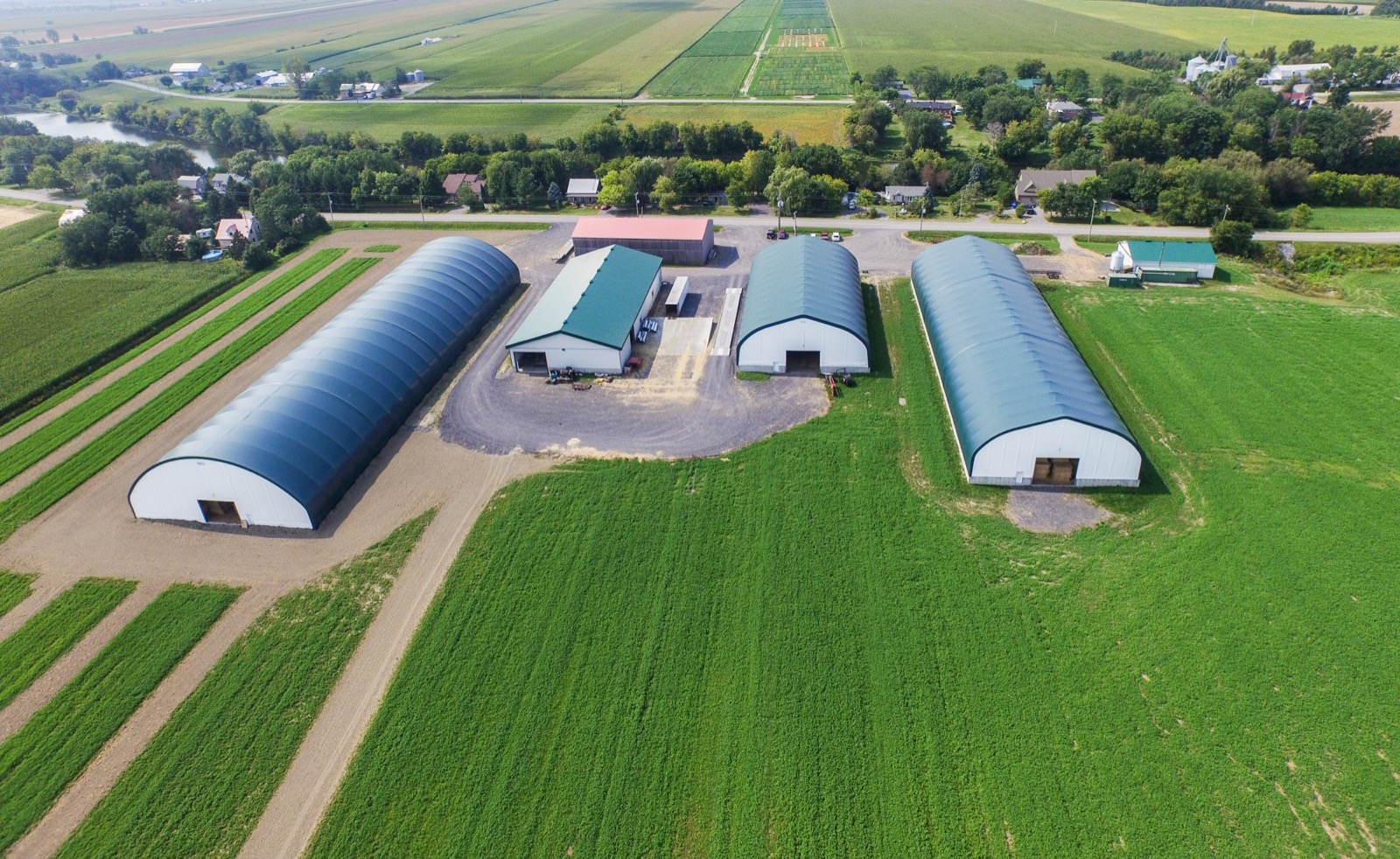
Aerial view of multiple fabric buildings on a working farm in Ontario

Multiple buildings on one property. Start with one, then expand when you're ready.

For me, the MegaDome was the ideal solution for protecting my herd from harsh weather. It provides them with the necessary comfort with an open area and free stabling, while maintaining natural light. Since its installation, the farm's efficiency has greatly improved.

Jimmy Harvey, Owner, Rewill Farm

Frequently Asked Questions

What is a fabric building?
A fabric building (also called a tension fabric building or coverall building) is a permanent structure consisting of a rigid steel frame covered by a highly durable engineered membrane. Unlike temporary tent structures, fabric buildings are engineered to meet full building code requirements including snow, wind, and seismic loads. Our fabric buildings use heavy-gauge oval tube steel arches and are built to 2020 Canadian Building Code standards.
How much does a farm fabric building cost?
Agricultural fabric building costs typically range from $15 to $38 per square foot depending on width, length, foundation type, and options selected. A standard 50' x 100' farm fabric building generally falls in the $75,000 to $190,000 range fully installed. Contact Integrity Builds for a detailed quote tailored to your specific requirements and site conditions.
Do fabric buildings meet Canadian building codes?
Yes. Every building we install is engineered to the current 2020 National Building Code of Canada (NBCC) standards. Each structure comes with sealed engineering plans specific to your site location, accounting for local snow loads, wind loads, and seismic requirements. This is not optional. It is standard on every build.
How long does fabric building installation take?
Installation timelines vary by building size and site conditions, but most agricultural fabric buildings can be fully erected in 1 to 3 weeks once the foundation is in place. The foundation phase typically adds another 1 to 2 weeks depending on the type selected (concrete blocks, piers, slab, or grade beam). Integrity Builds manages the entire process from site assessment through completed installation.
What is the difference between a fabric building and a steel building?
A fabric building uses a steel frame covered by an engineered fabric membrane, while a conventional steel building uses steel panels for cladding. Fabric buildings offer advantages including natural light transmission (up to 30% with the PowerShield membrane), faster installation, lower cost per square foot, and superior corrosion resistance since the membrane doesn't rust. Both building types can be engineered to meet the same code requirements.

READY TO BUILD?

Tell us about your project and get a fabric building quote from Southwestern Ontario's most trusted MegaDome distributor.

Monday – Friday, 8am – 5pm